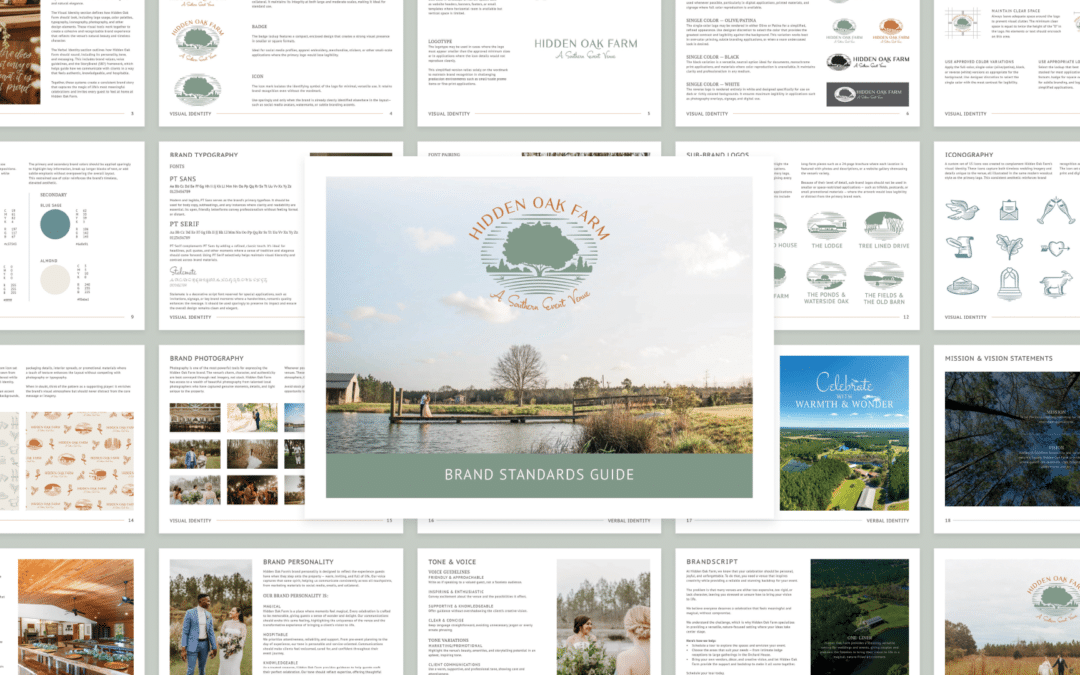
Many business owners think a logo alone defines their brand. In reality, a logo is just one piece of a bigger puzzle. To create a cohesive, recognizable brand that resonates, you need both a visual identity system and a verbal identity system.
In this guide, you’ll learn:
- What a visual identity system is and why it matters
- Why a logo alone isn’t enough
- What a verbal identity system is and how it complements visuals
- How 3SIXTY Marketing helps build complete brand identity systems
We’ll also show how Hidden Oak Farm uses these systems to create a consistent, memorable brand.
What Is a Visual Identity System?
A visual identity system is the complete set of visual elements that represent your brand consistently across every platform. Your logo is just the starting point. A full visual identity system ensures your brand looks professional, recognizable, and cohesive everywhere it appears.
Core Components:
- Primary and secondary logos for flexibility
- Color palette to reinforce your brand
- Typography that conveys personality
- Imagery and photography style for consistent visuals
- Patterns, textures, and graphic elements for support
- Layout and composition rules for consistent design
Example: Hidden Oak Farm combines earthy tones, elegant fonts, and woodsy textures across its website, social media, and print materials.
Why It Matters:
- Builds trust through consistency
- Saves time with clear guidelines
- Scales easily for campaigns, packaging, and social media
Why a Logo Alone Isn’t Enough
A logo is your visual signature, but it can’t do all the work. Without a supporting visual identity system, your brand risks:
- Inconsistency across platforms
- Limited flexibility for social media, email, or packaging
- Weakened storytelling, making your brand less memorable
A visual identity system keeps your brand cohesive while giving the freedom to adapt across channels.
What Is a Verbal Identity System?
A verbal identity system defines how your brand sounds. It ensures your messaging, tone, and voice are consistent across every touchpoint.
Core Components:
- Brand voice: Personality and style (friendly, professional, playful)
- Tone: Adjusted for context and audience
- Key messaging: Core statements that explain who you are and what you offer
- Taglines and value propositions to reinforce your story
- Messaging pillars for campaigns and content
- Writing style guidelines for grammar, punctuation, and word choice
Example: Hidden Oak Farm pairs warm, approachable language with its visual identity to create a consistent, cohesive brand experience.
Do You Need Both Visual and Verbal Identity Systems?
Yes. Together, these systems ensure your brand:
- Looks professional and consistent
- Builds recognition and trust
- Supports scalable growth
- Strengthens marketing and communication
Think of it as layers:
- Logo: Your symbol
- Visual identity system: All visual elements working together
- Verbal identity system: Unified messaging and tone
How 3SIXTY Marketing Builds Complete Brand Identity Systems
We help brands like Hidden Oak Farm create visual and verbal identity systems that tell their story and stand out. Our three packages meet different needs:
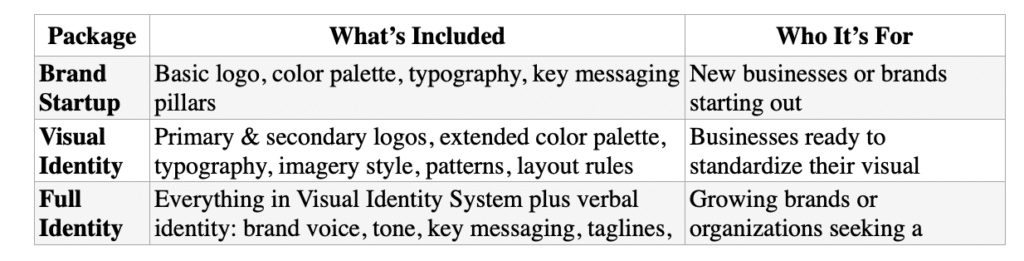
With these systems, your brand stays consistent and professional across social media, websites, print materials, and digital campaigns.
Conclusion
A logo alone isn’t enough. A complete visual and verbal identity system ensures your brand is recognizable, trusted, and memorable.
If you’re ready to go beyond a basic logo and create a cohesive brand that resonates, schedule a consultation with 3SIXTY Marketing today. Let’s build an identity system that works as hard as you do.
Recent Comments